Re-Siding Your Home: A Complete Guide to Choosing the Right Siding in Montana
Your home's siding is one of its most important lines of defense against Montana's challenging weather. From heavy snowfall and high winds to hail, rain, and intense summer sun, siding protects your home's structure while improving energy efficiency and curb appeal. If your siding is showing signs of wear or damage, replacing it can be one of the smartest investments you make.
At Next Chapter Construction Management, we help homeowners throughout Eastern Montana improve and protect their homes with quality siding installation built to last. Whether you're updating an older home or completing a full exterior renovation, understanding your siding options will help you choose the best material for your budget and long-term goals.
Why Replace Your Home's Siding?
Over time, siding naturally wears from years of exposure to the elements. Cracked panels, fading color, loose boards, and moisture damage can all reduce your home's protection and efficiency. Re-siding your home not only improves its appearance but also strengthens its defense against water intrusion, insects, and temperature extremes.
Benefits of replacing your siding include:
• Improved curb appeal
• Increased home value
• Better energy efficiency
• Reduced maintenance
• Greater weather protection
• Improved moisture resistance
• Longer-lasting exterior protection
If you're already replacing windows or installing a new roof, re-siding your home at the same time can create a complete weather-resistant exterior.
Signs Your Siding Needs Replacement
Some damage is obvious, while other problems are hidden beneath the surface.
You may want to consider replacing your siding if you notice:
• Cracks or holes
• Warped or buckled panels
• Loose or missing siding
• Rotting wood
• Mold or mildew
• Water stains inside the home
• Higher heating or cooling bills
• Frequent repainting
• Soft areas around windows and doors
When multiple issues appear, replacing the siding is often more cost-effective than making repeated repairs.
Popular Types of Siding for Montana Homes
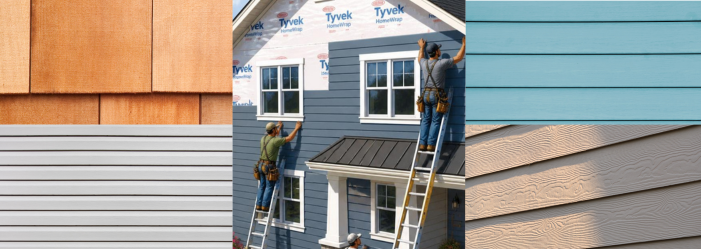
Vinyl Siding
Vinyl siding is one of the most popular choices because it offers affordability, durability, and very little maintenance. It is available in many colors and styles and does not require painting. While vinyl can crack under severe impact, quality products perform well in Montana's climate.
Average lifespan: 20–40 years
Average installed cost: $6–$13 per square foot
Fiber Cement Siding
Fiber cement siding combines cement, sand, and cellulose fibers to create a durable exterior that resembles painted wood. It resists insects, fire, moisture, and harsh weather exceptionally well.
Average lifespan: 40–50+ years
Average installed cost: $8–$18 per square foot
Engineered Wood Siding
Engineered wood offers the beauty of natural wood with improved durability and moisture resistance. It provides a warm appearance while requiring less maintenance than traditional wood siding.
Average lifespan: 20–30 years
Average installed cost: $7–$14 per square foot
Natural Wood Siding
Wood siding offers timeless beauty and natural character. Cedar remains a popular option because of its appearance and durability. However, wood requires regular staining or painting, and ongoing maintenance to protect it from moisture and insects.
Average lifespan: 20–40 years
Average installed cost: $8–$20 per square foot
Steel Siding
Steel siding is extremely durable and performs well in Montana's harsh weather. It is resistant to fire, insects, and severe wind while requiring very little maintenance.
Average lifespan: 40–60 years
Average installed cost: $10–$18 per square foot
Aluminum Siding
Although less common today, aluminum siding remains a lightweight, rust-resistant option that performs well in many climates. It can dent from impact but generally requires little maintenance.
Average lifespan: 30–50 years
Average installed cost: $7–$15 per square foot
Tools Used During Siding Installation
Professional siding installation requires specialized tools to produce accurate cuts and long-lasting results.
Some of the most commonly used tools include:
• Tape measures
• Chalk lines
• Laser levels
• Circular saws
• Miter saws
• Vinyl siding cutters
• Fiber cement shears
• Utility knives
• Tin snips
• Pneumatic nail guns
• Hammer drills
• Caulking guns
• Extension ladders
• Safety equipment
Using professional-grade tools allows contractors to create clean cuts, secure fastening, and proper alignment throughout the installation.
Scaffolding and Safety Equipment
Because siding is installed on exterior walls, professional contractors use equipment that improves both safety and efficiency.
Depending on the size and height of the home, installation may require:
• Frame scaffolding
• Pump jack scaffolding
• Rolling scaffolding
• Ladder jacks
• Boom lifts
• Articulating lifts
• Roof brackets
• Safety harnesses
• Guardrails
• Personal protective equipment
Proper scaffolding helps installers work more safely while producing straighter installation lines and higher-quality workmanship.
What Affects the Cost of Re-Siding?
The total cost of replacing siding depends on several factors, including:
• Size of the home
• Number of stories
• Type of siding selected
• Removal of existing siding
• Condition of wall sheathing
• Flashing and moisture barrier installation
• Trim and architectural details
• Accessibility
• Labor requirements
• Insulation upgrades
Homes with multiple dormers, custom trim, or difficult rooflines generally require more labor and materials.
Why Professional Installation Matters
Even the highest-quality siding will not perform properly if it is installed incorrectly. Professional installation ensures the siding is fastened, flashed, sealed, and aligned to prevent moisture intrusion and maximize its lifespan.
An experienced siding contractor like Next Chapter Construction Management understands how to integrate siding with windows, doors, roofing, and moisture barriers to provide complete weather protection.
For Montana homeowners, professional installation helps ensure your investment performs well through decades of snow, wind, rain, and changing temperatures.
Frequently Asked Questions
How long does it take to replace siding on a home?
Most homes can be re-sided in one to three weeks, depending on size, weather, and the siding material being installed.
What is the most affordable siding option?
Vinyl siding is generally the most affordable option while still providing excellent durability and low maintenance.
Which siding lasts the longest?
Steel and fiber cement siding are among the longest-lasting materials, often lasting 40 years or more with proper installation and maintenance.
Can replacing siding improve energy efficiency?
Yes. Installing new siding with modern house wrap and insulation can improve your home's energy efficiency by reducing drafts and improving insulation.
Should windows be replaced when installing new siding?
Many homeowners choose to replace windows during a siding project because it allows flashing and weather barriers to be integrated while reducing future labor costs.
Can damaged siding be repaired instead of replaced?
Minor damage can often be repaired. However, widespread deterioration, moisture damage, or aging siding usually makes complete replacement the more cost-effective long-term solution.
Sources
This Old House – All About Siding
This Old House – How to Choose the Best Siding for Your House
The Home Depot – Types of Siding
The Home Depot – Siding Resources
Bob Vila – House Siding Cost Guide
James Hardie Homeowner Resources